Sport Court Fence Installation in Salt Lake City, UT Keep the Ball on the Court
Chasing balls into the neighbor's yard gets old fast. A proper court fence keeps play in bounds and the game going. Call (801) 341‑9099; we answer the same day.
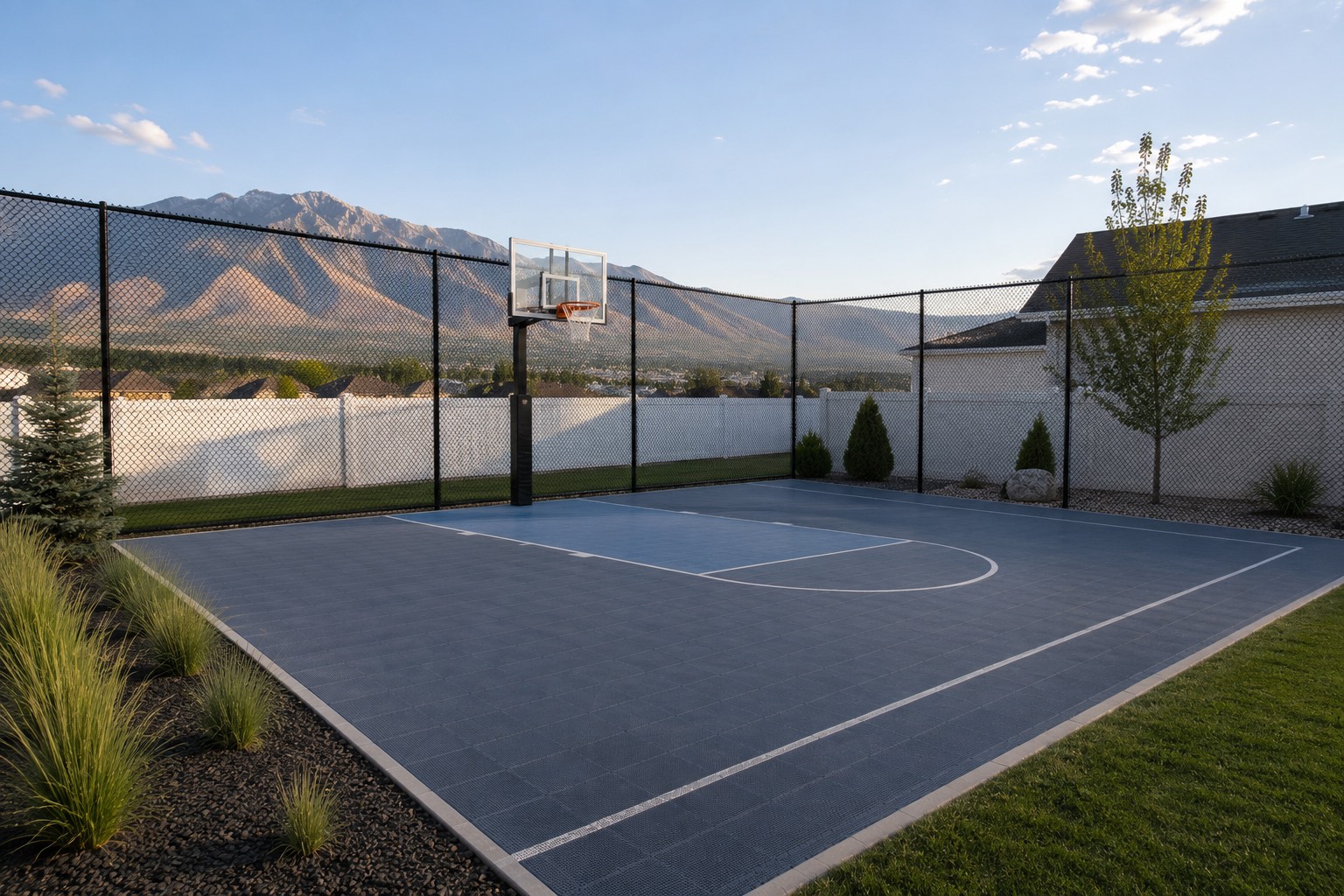
A backyard court is a serious investment, and nothing kills it faster than spending half the game fetching balls three yards over. Good court fencing turns a bare slab into a court you actually use: tall enough to contain play, open enough to see through, and built to take repeated impact without bowing. We fence basketball courts, tennis courts, and pickleball courts across the Salt Lake Valley, on both residential and commercial jobs.
Why athletic courts need a fence
The clearest sign is the one you already know: balls leaving the surface. Whether it's a driveway hoop, a new pickleball slab, or a full tennis court, an open court means constant interruptions and, eventually, an annoyed neighbor or a broken window. A fence keeps the game in bounds and keeps the ball off the road.
New builds are the other trigger. If you're pouring a slab this season, fencing should be planned alongside the court construction, not bolted on after. Post placement is far easier to get right before the concrete cures and the landscaping goes in, which is why we like to start at the layout stage.
Fence heights by sport
Height is what most people underestimate, and it's the single biggest driver of both performance and price. Court fencing should follow the sport and the court layout rather than a generic backyard-fence template; for tennis specifically, the USTA tennis-facility guidance publishes technical specifications and facility-design resources worth building to. We confirm the number by measuring the court and asking where the balls actually go, but these are the starting points we spec around:
- Pickleball courts: eight to ten feet on the ends, often lower along the sides.
- Tennis court: ten feet is standard, with a taller backstop behind each baseline.
- Basketball courts: commonly more height behind the hoop than along the sidelines.
- Multi-use courts: speced to whichever sport sends the ball highest.
Chain-link mesh, netting, and backstops
Most sport courts are chain-link fencing, and for good reason. Black or green vinyl-coated chain-link mesh nearly disappears against a yard, it takes repeated ball impact without denting, and it costs a fraction of the alternatives at the heights courts require. Where a sport sends balls over the top, we add netting above the fabric or a dedicated backstop panel so nothing clears the court. For a finished look where the court meets the street, chain-link pairs cleanly with a run of ornamental iron or a privacy panel.
How we install court fencing
Our court fencing installation starts with layout. Posts are set in concrete and spaced tighter than a standard yard fence, because a ball hitting mesh at speed puts real load on each post. We tension the fabric drum-tight so it stays flat instead of bagging, run full height on the impact ends, and keep the sides lower where you'd rather protect the view. Every gate is sized so mowers and equipment get onto the court easily. Most residential courts go up in one to three days once materials arrive, and we work around a fresh slab without marking it.
Residential and commercial courts
We fence courts at every level, from a single backyard hoop to commercial and school athletic courts. Residential jobs are usually one court and a gate or two. Commercial and municipal work adds code requirements, wider access gates, and heavier traffic, so we build those court fences to a higher spec. Either way the standard is the same: plumb posts, tight fabric, and a straight, level top.
What court fencing costs
Height and footage drive the price, and height matters more here than on any other fence we build: a ten-foot run costs meaningfully more per foot than a six-foot one. As a fencing company that quotes in writing, we lock the number before we order material, there's no trip fee, and we'll tell you honestly if fencing two adjoining sides gets you ninety percent of the benefit. The main cost drivers:
- Height: the biggest factor; taller runs cost more per foot.
- Footage and sides: all four sides versus just the two impact ends.
- Mesh and netting: vinyl-coated chain-link, plus any backstop netting.
- Gates: walk gates and wider equipment access.
Want the full picture first? Our services overview lays out how we price every job, or get an exact figure with a free on-site estimate.
Why choose Trusted Fence
Court fencing is unforgiving in a way yard fencing isn't. Undersized posts and loose fabric show up the first hard week of play. We build to the load, tension it properly, and the work gets referred yard to yard. Locally owned and insured, Landon writes the quote himself, and the satisfaction guarantee covers the finished court being plumb, level, and square. Sport courts are part of our Specialty & Purpose Fencing work, and if you're still comparing materials, our fence installation overview lays out all six side by side.
Common Questions
How tall should a sport court fence be? +
It depends on the sport. Pickleball courts usually work at eight to ten feet, a tennis court wants ten with a taller backstop, and basketball often needs more height behind the hoop than along the sides. We spec it around where the balls actually go.
What kind of fence is best for a backyard court? +
Chain-link, almost always. Black or green vinyl-coated mesh nearly disappears against a yard, takes repeated ball impact without denting, and costs a fraction of the alternatives at the heights courts need.
How much does it cost to fence a tennis court? +
It comes down to height and footage. A full ten-foot tennis court enclosure costs more per foot than a lower yard fence, and the total moves with gate count, netting, and whether you fence all four sides. The written estimate is free and locked before we order material.
How tall should a pickleball court fence be? +
Eight to ten feet on the impact ends is the usual target for pickleball courts, with lower sides where you'd rather keep the view. The right number depends on how hard the court gets played, which we confirm on site.
Do I need a permit to fence a court? +
Sometimes, depending on your city and height. Taller athletic-court fences are more likely to need one than a standard yard fence. We flag it during the estimate and can point you to the right counter before we start.
Do I have to fence all four sides? +
Often not. Fencing the two impact ends full height and leaving the sides lower gets most homeowners ninety percent of the benefit for noticeably less money. We will tell you honestly which applies to your court.
Keep the game on the court.
Call (801) 341‑9099 for a same-day response and a free on-site estimate. Basketball, tennis, or pickleball, we will spec the height that actually contains play.