
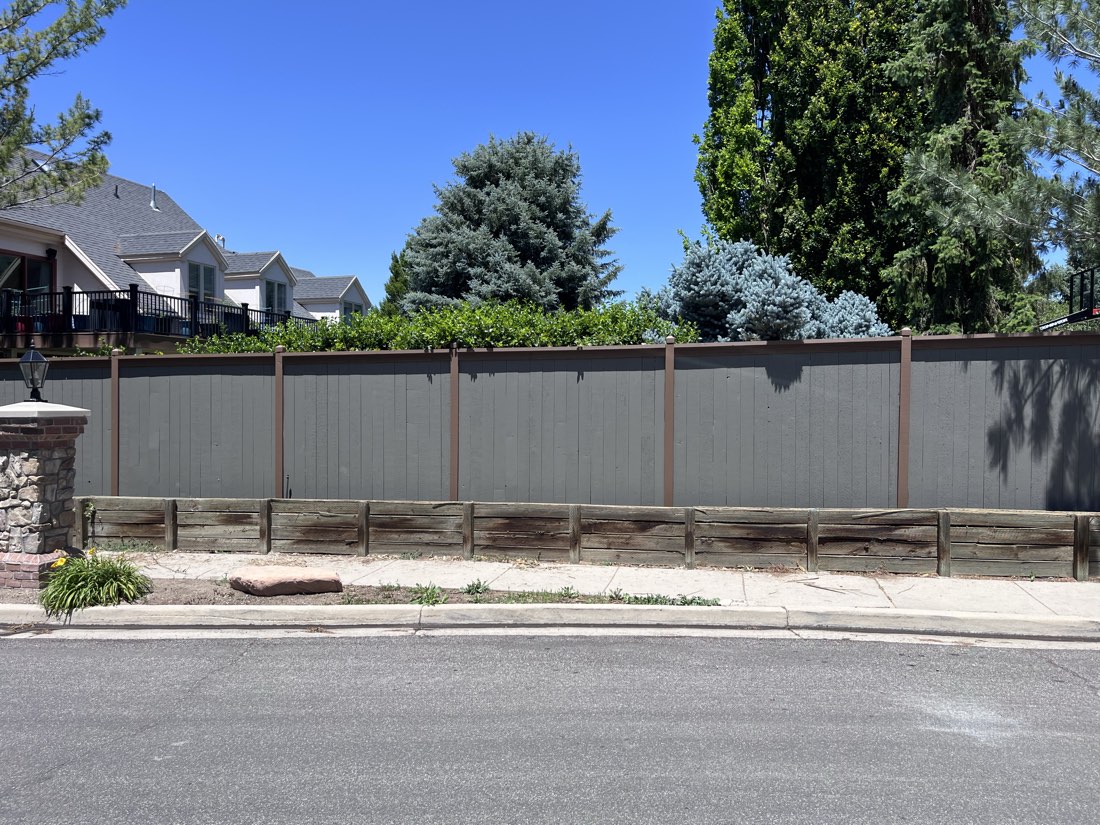
When to stain a new cedar fence
Not the same day it goes up. The wait, the water test, and why spraying alone leaves you short.
A new cedar fence looks its best on the day it goes up, and that is exactly the day you should not stain it. The wood is still carrying moisture from the mill and the yard, and finish applied over that moisture does not bond. It sits on the surface, then peels.
The wait is short and it is the difference between a coat that lasts and a coat you redo next year.
Wait for the wood to dry out
Cedar needs to dry out first, usually a few weeks to a couple of months after install. The exact window depends on the season it went up in and how much sun that line gets. A fence built in July is ready sooner than one built in October.
We quote staining up front so it gets planned instead of forgotten, which is the actual failure mode. Almost nobody decides against staining cedar. They just never get around to booking it, and two summers later the fence is gray.
The water test tells you when to recoat
After the first coat, the schedule is roughly every few years in this climate, and sooner on sun-hammered south and west exposures. You do not have to guess. Flick water at the boards. If it beads, the finish is still working. If it soaks straight in, it is time.
Run that test on the worst-exposed section, not the shaded one. The south face is the one that fails first, and it sets the schedule for the whole line.
Already gray? Usually still fixable
Gray is UV damage to the surface fibers, not rot, so it is normally recoverable. Cleaning and brightening lifts the gray so stain bonds to fresh fiber underneath. Boards that are cracked or cupped past a point get swapped before we finish, so the coat actually lasts rather than sitting on top of a board that is already failing.
If you are not sure whether your fence is at that point, a fence inspection answers it in one visit, and you get a straight yes or no.
Spray and back-brush, not spray alone
This is the part that separates a finish that lasts from one that looks fine for a season. Spraying alone leaves thin spots. We spray and back-brush to work the finish into the grain, on every job, which is slower and is the only way the coat wears evenly.
The same applies if you want solid color instead of stain. Some homeowners want paint to match a house or to cover an older fence, and we spray and back-brush exterior paint the same careful way. We will walk you through where paint makes sense and where a penetrating stain wears better.
Book it with the build
The easiest version of all of this is deciding once. Quote the fence and the finish together, put the staining date in the calendar for a few weeks out, and it happens. See staining, sealing and painting for what the visit covers, or call and we will price both on the same estimate.
Straight lines. Straight answers.
Free on-site estimate, a written price that does not move, and a same-day response when you call. Anywhere in Salt Lake County.