Cedar, vinyl, or composite: what lasts in Utah
High-altitude UV is the thing that decides this, not the brochure. What each material costs you in upkeep once it is standing.
Every material comparison you will read online was written somewhere at sea level. Utah is a harder test than that. High-altitude UV, a wide freeze-thaw swing, and clay soil that moves all take their turn at whatever you put in the ground, and they sort the three most common privacy materials very differently than a brochure does.
Here is how cedar, vinyl, and composite actually behave here, and what each one costs you after the install crew leaves.
Cedar
Cedar is the one most people picture, and with posts set in concrete and the wood sealed on schedule it commonly lasts decades here. That sentence has a condition in it, and the condition is the whole story. Bare, unsealed cedar grays within a couple of summers and gets brittle far sooner. Staining is what separates those two outcomes.
So cedar is not the low-maintenance option. It is the option with the best price up front and the warmest look, and it asks for a coat every few years in exchange. If you know you will not do that, be honest about it now rather than three summers from now.
What it is best at
Warmth, cost per foot, and taking a hard impact. A cedar board that gets hit can be swapped. Cedar fence installation also gives you the most freedom on style, from board-on-board to shadow box.
Vinyl
Vinyl will not rot, warp, or need paint, and a properly spanned line handles wind well. The failure people worry about is yellowing, and that worry is earned: cheap panels do yellow, because high-altitude UV is hard on bargain vinyl. It is not a vinyl problem, it is a which-vinyl problem.
We install UV-inhibited panels that carry a fade warranty, and the product line is named in your quote so you can look it up yourself before you agree to it. That is the part to insist on from anyone bidding your job.
What it is best at
Walking away from it. Vinyl fencing is the middle of the market on price and the low end on upkeep, and if a panel does break later, the posts are usually sound enough to swap that panel alone instead of rebuilding the line.
Composite
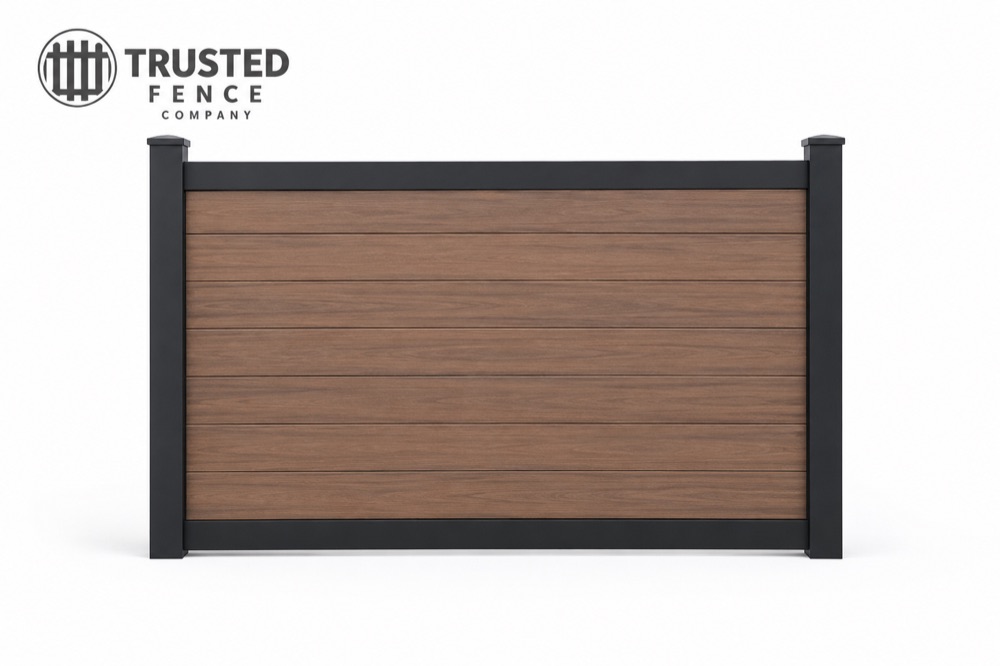
Composite costs more per foot than cedar or vinyl and repays it in zero maintenance: no staining, no fading, no warping. Whether that trade is worth it depends entirely on how long you intend to own the yard, which is why we put the numbers side by side at the estimate instead of arguing the point.
The other thing composite does, which the other two do not do as well, is block sound. The panel mass makes a real difference compared with hollow vinyl or gapped cedar, and homes along busy corridors notice it most. If you are fencing against traffic noise rather than sight lines, that alone can decide it.
What it is best at
Mass and permanence. We install SimTek, Trex, and Avimore, we bring samples to the estimate, and we leave the manufacturer spec sheets with you. See composite fence installation for the full spec.
The honest summary
If price up front matters most and you will keep it stained, build cedar. If you want to stop thinking about it at a fair price, build vinyl and insist on knowing the product line. If you are staying put and want mass, quiet, and no upkeep, build composite and accept the number.
Whichever you land on, the part that decides whether it is still standing straight in ten years is the same for all three: every post set in concrete, not tamped dirt, with gate posts sunk deeper than line posts. That does not change with the material.
Not sure yet? That is what the free estimate is for. We will bring samples and put real figures against each one, on your property, in one visit.
Straight lines. Straight answers.
Free on-site estimate, a written price that does not move, and a same-day response when you call. Anywhere in Salt Lake County.