
Which Fence Material Should I Choose? A Salt Lake City Homeowner's Guide
Which fence material should I choose?
It depends on your yard as much as the material. Soil, water, sun and wind change the answer more than most people expect.Pick the one that fits your yard, not the one that worked next door. The same material can hold up in one yard and fail in the next, because soil, water, sun and wind change the result.
Why the same fence material can perform differently from yard to yard
Your neighbor's cedar fence might still look great while yours leans. Same wood, same street, same weather. Usually it is the yard, not the material.
Before I suggest a material, I look at four things:
- Soil. Sandy soil falls apart in your hand. Clay holds together, especially when it is wet.
- Water. I look for standing water, low spots and sprinkler heads that soak the fence line.
- Sun. South and west sections take more of a beating. It matters most for cedar.
- Wind. Exposed yards, especially around the benches, catch a lot of it.
I don't bring soil-testing equipment to an estimate. I walk the yard and pick up some dirt. Clay-rich soil shows up in parts of West Valley City and West Jordan, but it can change from one side of a yard to the other, so I don't make blanket statements about a whole city.
Here is what that looks like in practice. In April I looked at a white vinyl fence in West Jordan that another company had built. The homeowner said it was about six years old.
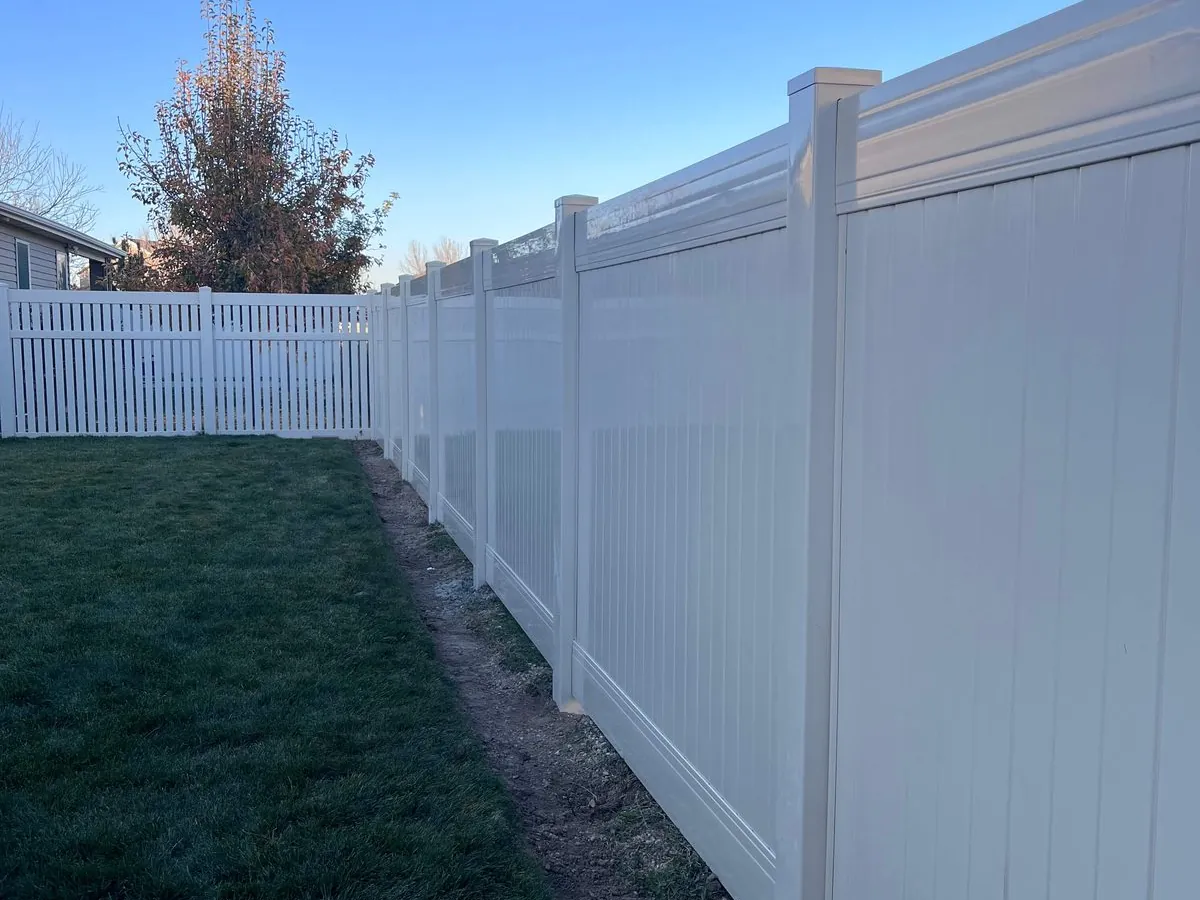
Three or four sections had shifted, a couple of panels were coming out of their rails and a few posts leaned in different directions. The gate was the biggest headache. You had to lift it to line up the latch.
We dug around one of the bad posts. It was only 14 to 16 inches down, with a little concrete around the bottom and not nearly enough. The soil was clay that clumped on the shovel, and a sprinkler head was spraying close to the fence.
The homeowner told me something like, "I thought the whole point of vinyl was that it was supposed to last." I told them the vinyl itself wasn't necessarily the problem. You can buy good material and still end up with a bad fence if someone cuts corners on the install.
When wet clay freezes, the ground can move, and posts that aren't well supported move with it. I can't say frost was the only cause. I can say I wouldn't have trusted those footings either way.
They asked if we could just straighten it. With several posts moving and panels that no longer fit, that is a lot of labor chasing one problem after another, so we replaced the affected run. We also talked about aiming that sprinkler head away from the fence. It was straight at the final walk-through.
That is why installation matters so much. Our standard is posts two feet deep in concrete, and gate posts go deeper. The hole has to be sized right, the post positioned right and the footing finished so it doesn't leave a dip around the top that holds water. A handful of gravel is not a universal fix. In clay that doesn't drain, gravel at the bottom gives the water nowhere to go.
Wind changes the build too. A six-foot solid privacy fence is basically a big sail, so on an exposed lot I look at post spacing, post strength and how everything is anchored. Gate posts get extra attention because they carry the gate's weight and swing all day.
Want a quick test? Walk your fence line the morning after the sprinklers run and look for wet spots. Come back around 4 p.m. and see where the sun hits hardest.
Don't pick a fence material just because it worked next door.
Comparing fence materials: durability, upkeep and looks
Every fence material wins somewhere and loses somewhere else. Here is how the main options stack up:
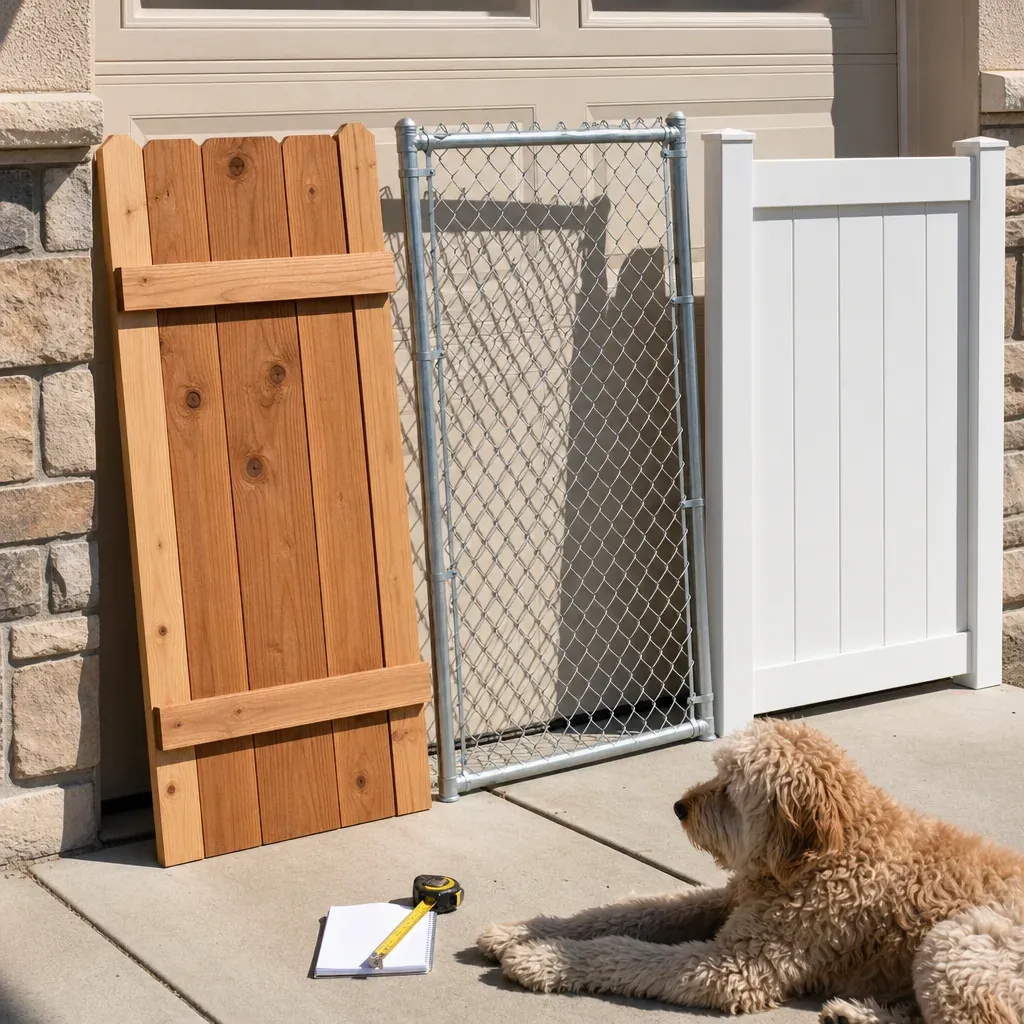
- Cedar and wood: warm, classic and easy to customize. I tell people to expect to restain every two or three years, depending on the stain, the sun and how exposed the fence is.
- Vinyl: clean lines that won't rot or need paint. Cold can make PVC more vulnerable to impact, so the quality of the product matters. I'd rather use a reputable manufacturer than make promises based on how thick a panel looks.
- Composite: the look of wood without the staining. Low maintenance is not no maintenance. It still needs a wash now and then, and fading depends on the product. I won't promise a composite fence looks the same in fifteen years.
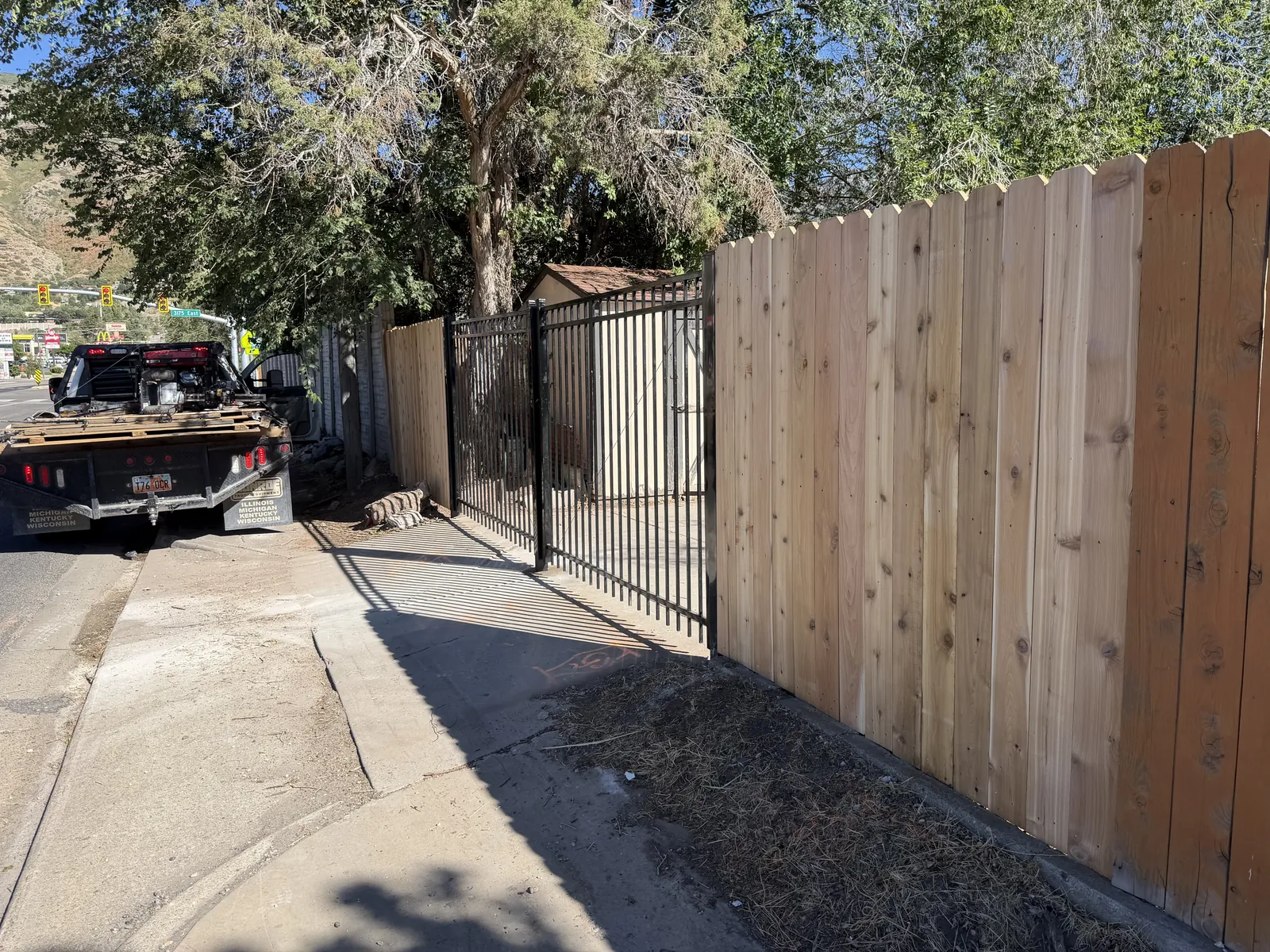
- Aluminum and ornamental iron: open and elegant, good for pools and front yards. Aluminum doesn't rust. Iron is heavier and may need paint touch-ups.
- Chain link: simple and tough. Not much to look at, but it asks very little of you.
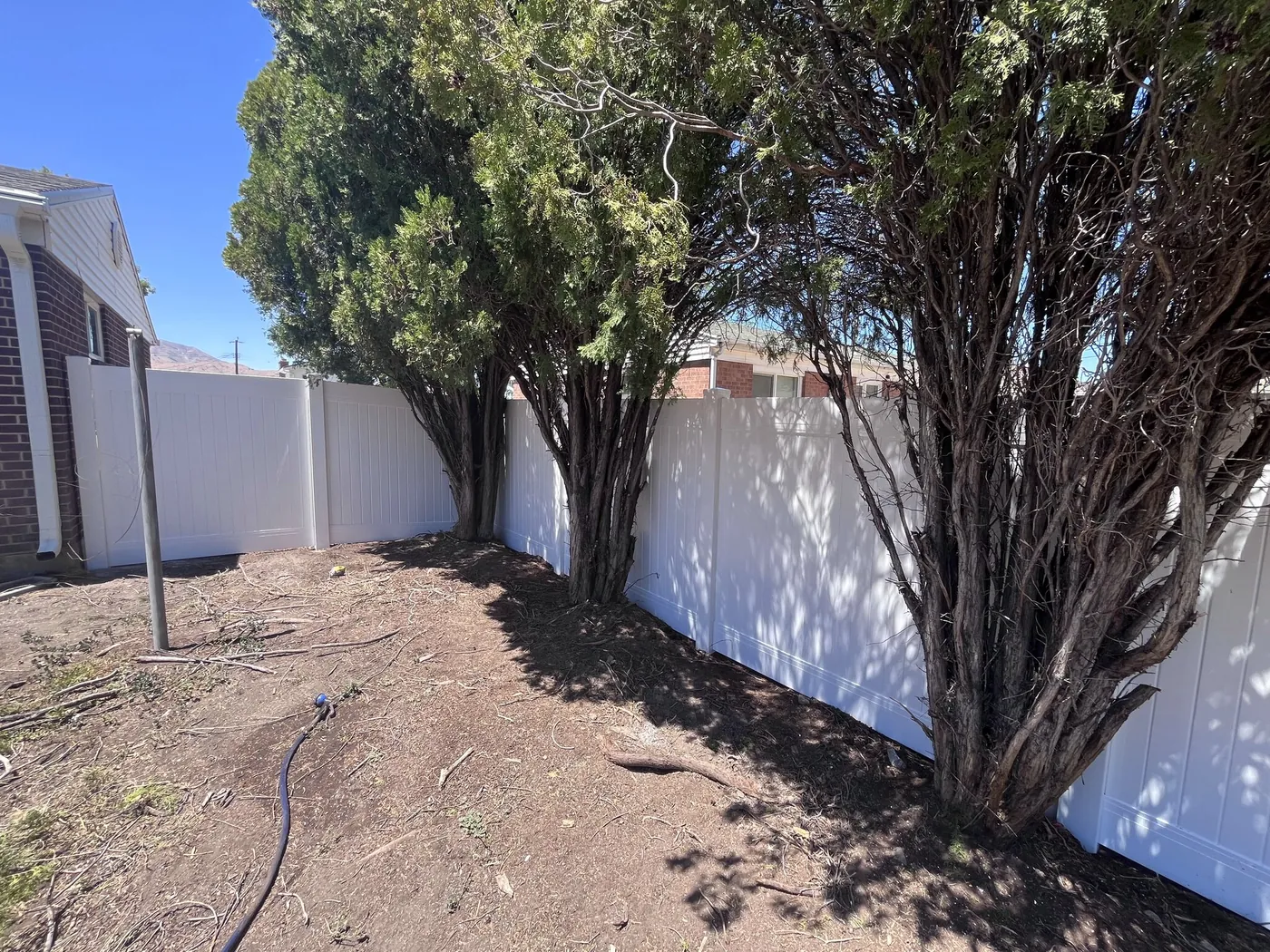
A Sugar House homeowner called me in June about an older cedar fence that had weathered badly. They still liked how wood looks, but they were tired of the maintenance. I told them the south and west sides would need restaining more often. I like cedar, but I always ask how much maintenance someone will realistically do. We priced composite, but the difference was more than they wanted to spend, so they went with white vinyl.
That conversation comes up a few times a year. They usually don't hate wood. They are just tired of maintaining it. Looks matter, but so does how many Saturdays you want to give up.
A good fence contractor in Salt Lake City should walk through these trade-offs on your actual property, not from a brochure.
Matching material to your main use case
Start with one question: what does this fence need to do every single day? Most people want several things from a fence, but one almost always matters most. Pick that one first, and you are choosing between a few options instead of all of them.
- Privacy from neighbors or a busy street: vinyl, wood or shadow box.
- A dog that runs the fence line: chain link, vinyl or wood, with the bottom boards tight to the ground.
- A pool: local code comes first. Aluminum or ornamental iron with narrow pickets keeps the water in view.
- A front yard that looks sharp: iron or aluminum frames the house without hiding it.
- Horses, cattle or deer on a bigger lot: ranch rail or deer fencing over long runs.
Once the main job is clear, looks and upkeep break the tie. Vinyl doesn't need staining. Wood does.
Check the rules before you fall in love with a style. In Salt Lake City, the city fence code allows up to 4 feet in front of the front building line and 7 feet at or behind it, and every fence needs a building permit. We file the city permit where one is required. Your HOA may be stricter, and the HOA application is yours to file, with the documentation we supply.
As a Salt Lake County fence company, we walk your yard, your goals and your HOA rules before we suggest a material, and the estimate is free.
The fence only works if it does its main job.
Watch
Watch: which fence material is best for Salt Lake City yards

Written by
Landon Mickelson
Owner & Estimator, Trusted Fence Company
Landon Mickelson was born and raised in Utah. He got his start in the fencing industry in 2024 before teaming up with his professional building partners to found Trusted Fence Company in 2025. He brings a personal, thoughtful approach to an industry filled with contractors trying to make a quick buck at your expense.
Frequently Asked Questions
How do I know if my yard needs a different fence material than my neighbor's? +
Your yard likely needs a different material if your soil, sun, or sprinkler setup differs from theirs. Clay soil holds water and swells, while sandy soil drains fast. A south-facing yard bakes wood faster than a shaded one. Walk your fence line after sprinklers run and again in the afternoon sun to see what your yard really deals with. These small checks matter more than copying what worked on someone else's property.
What causes a fence to lean or warp after only a few years? +
Posts set too shallow, with too little concrete, are a common cause, especially in wet soil near a sprinkler line. When wet soil freezes, the ground can move and shallow posts move with it. The fence material usually isn't the problem. Proper post depth and good drainage at the base matter more than which material you pick. We set posts two feet deep in concrete.
Is it a misconception that vinyl fencing never has problems? +
Yes, this is a common misconception. Vinyl won't rot like wood, but it can still lean if its posts are set shallow or sit in wet clay. Cold can also make vinyl more vulnerable to impact, so the quality of the product matters. Vinyl is low maintenance, not problem-free. Good installation protects any fence material, including vinyl.
How does Salt Lake Valley weather affect which fence material I should choose? +
Salt Lake Valley weather pushes hard on every fence material through hot, dry summers and freezing winters. Wood can dry out and crack in the sun. Cold can make vinyl more vulnerable to impact. In clay-rich soil, wet ground can shift posts during freeze-thaw cycles. Knowing your yard's sun exposure and soil type helps you pick a material built to handle these swings.
Do HOA rules in Salt Lake City limit which fence material I can use? +
Many Salt Lake City HOAs do limit fence height, color, or style, and this can affect which material fits your property. Front yard fences often have lower height limits than backyard fences. Pool areas usually follow stricter safety rules too. Check your HOA guidelines before choosing a design. A local fence contractor in Salt Lake City can walk you through these rules on your own property.
Can I mix fence materials on one property? +
Yes, mixing materials is common and often works well. Many homeowners use a solid privacy material like vinyl or wood in the backyard and a more open option like aluminum along the front. This balances privacy, looks, and airflow based on each part of your yard. Soil, slope, and sun exposure can differ from front to back, so matching material to each area often makes more sense than picking just one.
Straight lines. Straight answers.
Free on-site estimate, a written price that does not move, and a same-day response when you call. Anywhere in Salt Lake County.