Is cedar a good wood for fences? Pros and cons explained
What makes cedar rot resistant, where that protection stops, how Salt Lake City weather works on it, and when to stain and seal it.
Yes, cedar is a good fence wood for most Salt Lake Valley yards, as long as the boards are mostly heartwood and the bottom of the fence stays out of wet soil. The USDA Forest Products Laboratory's Wood Handbook rates western red cedar heartwood "resistant" to decay. That rating means the wood generally holds up above ground. For wood buried in soil, the Handbook points you to its "very resistant" group or to preservative-treated lumber.
What makes cedar rot resistant, and where that stops
The protection is in the heartwood, the darker center of the log. Natural compounds there slow the fungi that cause rot. Sapwood, the lighter wood near the bark, doesn't have them, and the Handbook says untreated sapwood of essentially every species has low decay resistance, cedar included. Two cedar fences can perform differently for that reason alone. When you compare cedar bids, ask about heartwood and grade, not just whether the tag says cedar.
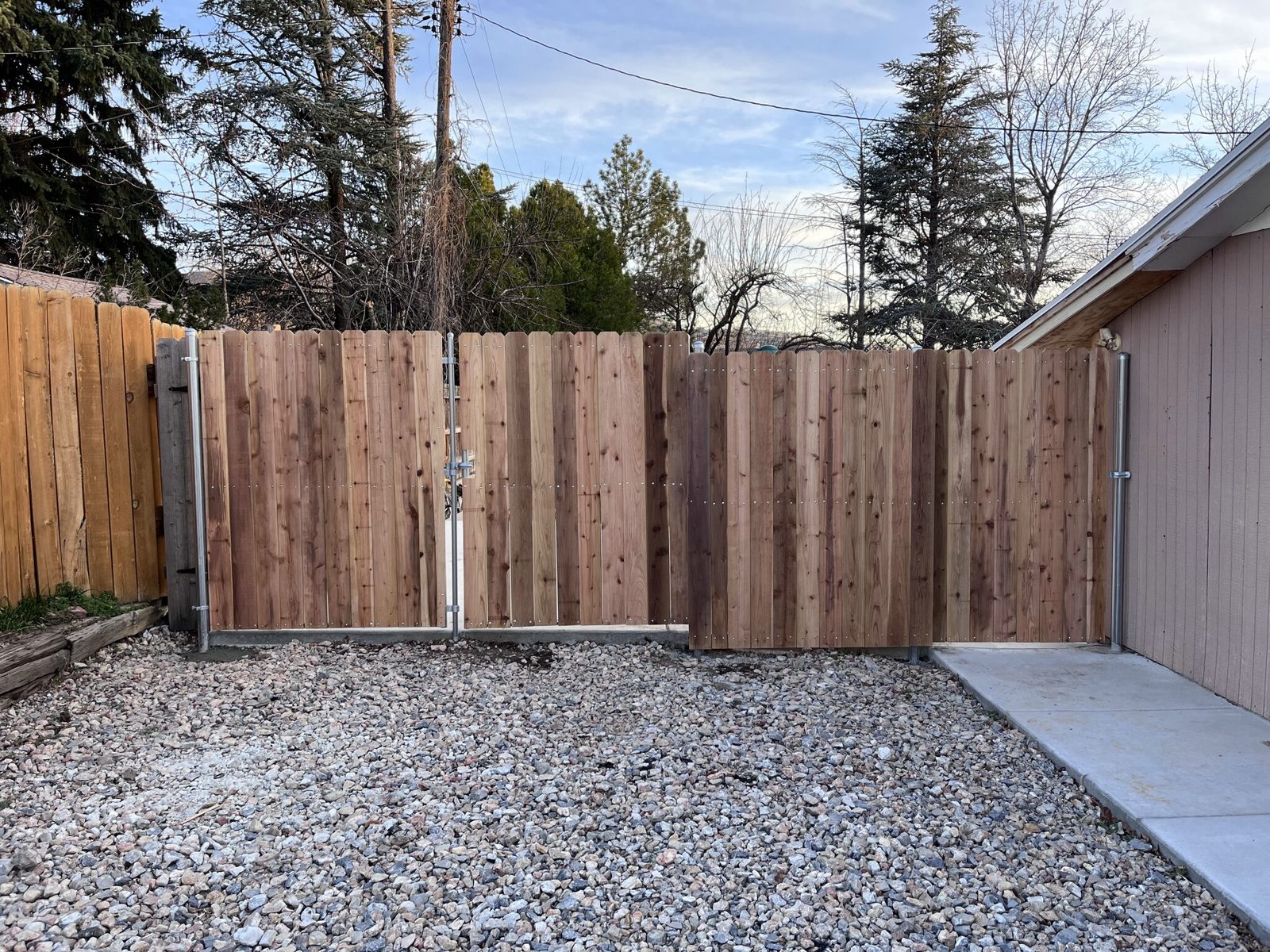
Rot also needs water, and a lot of it. According to the Handbook, serious decay only happens when wood is above about 30% moisture, and air-dried wood at 20% or less has "a reasonable margin of safety." Humid air can't get wood that wet on its own. Liquid water can: soil, rain, snowmelt and sprinklers.
How Salt Lake City's weather works on cedar
Our dry air is on cedar's side. The Handbook's outdoor moisture table puts wood in Salt Lake City at about 6.8% moisture in July and 14.9% in December. That stays under the 20% line even in our dampest month, while wood in Seattle sits between 12% and 16.9% all year. A cedar fence here doesn't rot from the air. It rots where something keeps it wet.
That cuts both ways. A Forest Products Laboratory guide, Protecting Wood Fences for Yard and Garden, notes that in dry areas even moderately resistant woods like Douglas-fir heartwood last almost as long as western red cedar in the above-ground parts of a fence. In this valley, cedar's rot resistance earns its keep in the wet spots:
- Boards touching soil or mulch. The same guide says decay is worst at the ground line, where soil moisture meets air.
- Pickets a sprinkler hits every morning.
- Board ends. The Handbook says water enters end grain 10 to 100 times faster than it enters the faces.
- Rail tops and joints, where water sits between a rail and a board.
- Snow shoveled against the fence in a shady spot, where it melts slowly.
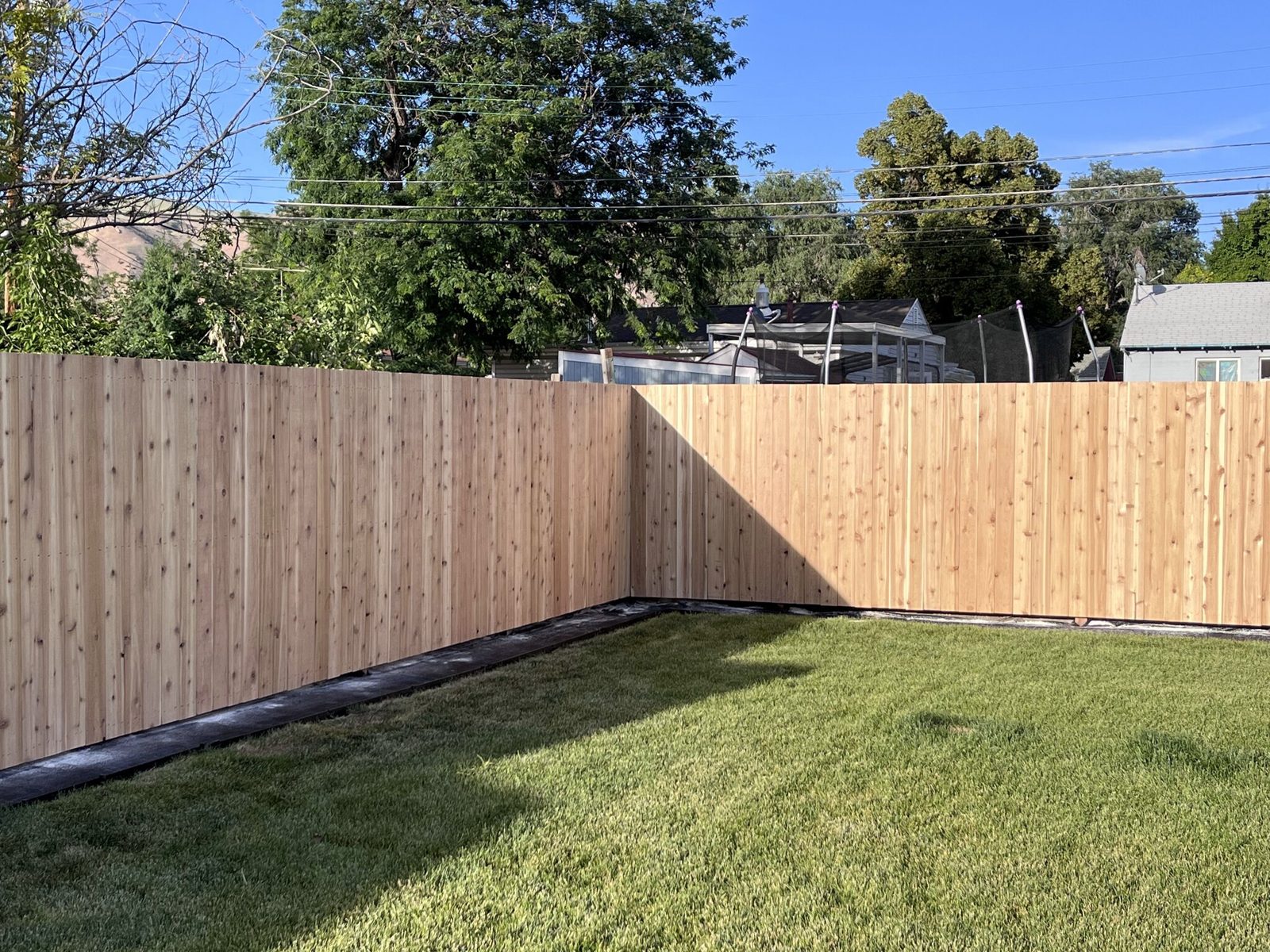
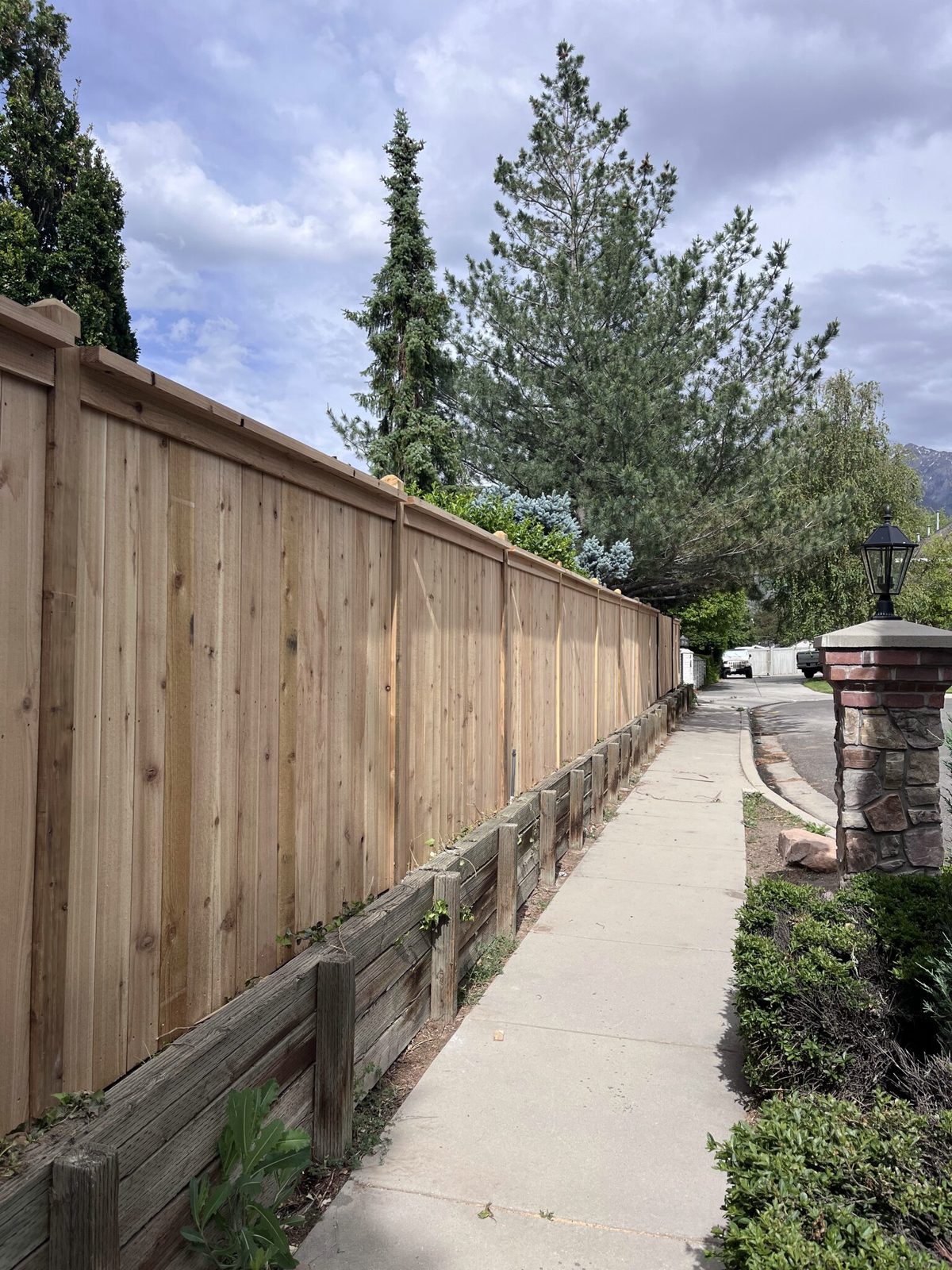
Take the cedar privacy fence my crew built in Sugar House. It runs along a mulch bed under mature trees, so part of the line sits in tree shadow while the rest takes full sun. Those halves will age differently. The shaded run dries slower after a storm, so mulch has to stay pulled back from the bottom boards there. The sunny run is the one that grays and checks first. Sun, shade, sprinkler reach and whatever is piled against the line are the things I point out at the estimate, because they decide where a cedar fence wears out.
Sun and moisture swings
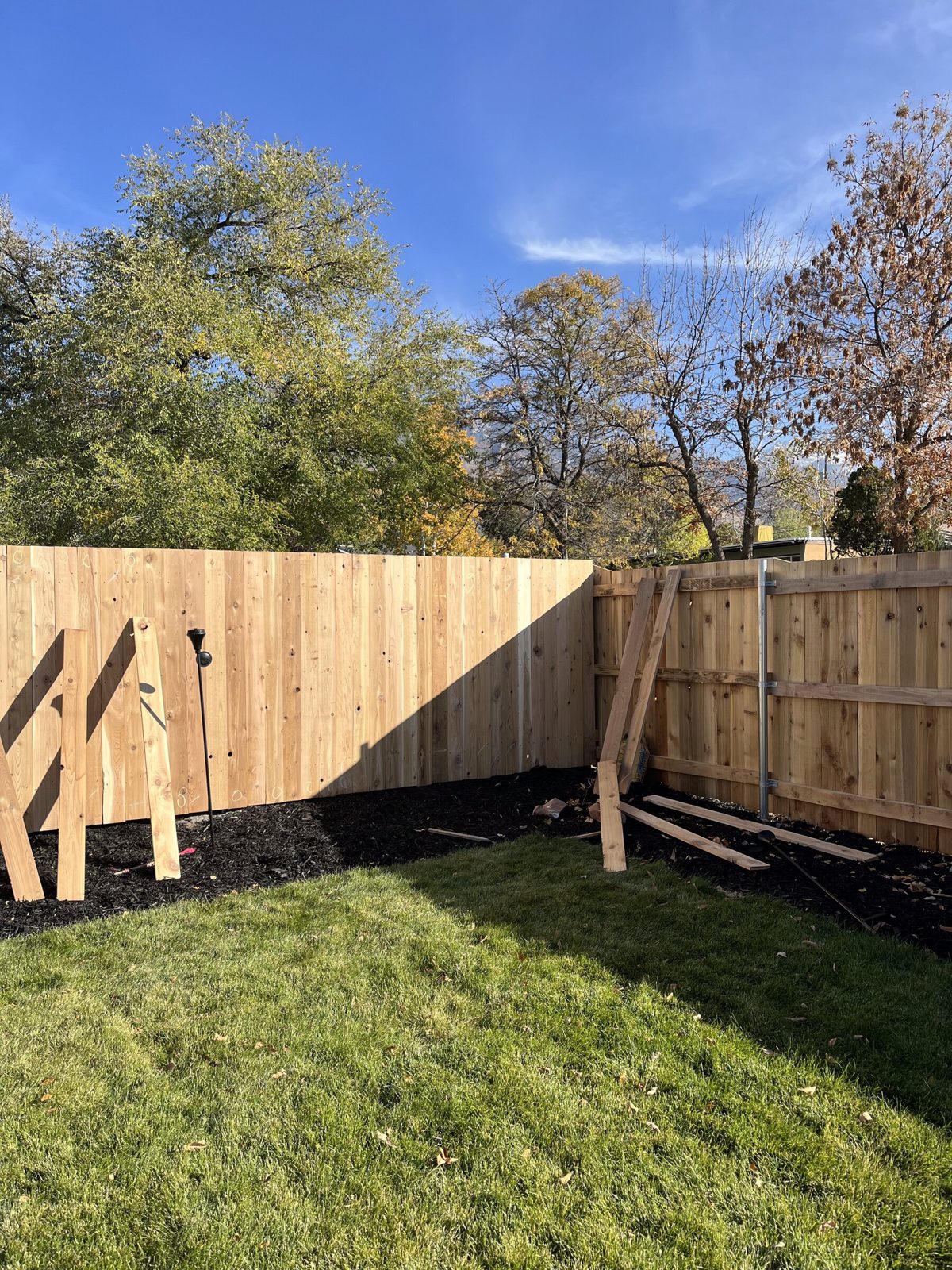
Salt Lake City sits at about 4,225 feet, and the EPA notes UV gets stronger as elevation rises. NOAA's 1991 to 2020 normals for the airport also count about 62 days a year at 90°F or hotter. Sunlight breaks down the outer layer of wood, which is why bare cedar turns gray, and the Handbook adds that the silvery sheen shows up most in arid climates like ours. Gray isn't rot. It's surface damage, and the Handbook puts erosion at roughly a quarter inch per century. Darker stains absorb more heat, and the Handbook links that to more warping and checking, so a lighter color is a reasonable choice for a long south- or west-facing run.
That 6.8% to 14.9% swing also explains the gaps. Boards shrink through the dry summer and swell back in winter. Forest Products Laboratory research found south-facing siding cupped and warped more in Phoenix than in Florida, Ohio or Wisconsin, and traced it to larger, faster swings in humidity. Dry Western air works on wood the same way, which is one more reason cedar's stability matters here.
Winter and frost heave
NOAA's normals show about 112 days a year with lows at or below freezing and about 52 inches of snow. That sets up frost heave, which the North Dakota Geological Survey describes as the ground surface lifting as ice forms in the soil beneath it. Frost heave needs three things: freezing temperatures, the right kind of soil and a ready supply of water. I can't change the freezing, but drainage and sprinkler aim control the water. My crew sets posts two feet deep in concrete, with gate posts and 8-foot fences deeper. When a cedar fence leans or a gate stops latching after winter, look at the posts and the ground around them before you blame the boards.
The real pros and cons of a cedar fence
Pros
- Its heartwood resists decay above ground without chemical treatment.
- It stays flat. Western red cedar has the lowest shrinkage figure in the Handbook's range, 2.4% (radial) from green to oven-dry, and the Handbook notes that low-density woods check, cup and warp less.
- It's light and cuts cleanly, which helps on sloped lots, at corners and on gates.
- It takes stain in any shade and looks like real wood, knots and all.
Cons
- It needs a finish every few years to keep its color.
- It's soft. Left bare, cedar erodes faster than denser woods in the Handbook's long-term outdoor tests, and it dents more easily.
- It isn't rated for ground contact, so the bottom of the fence has to stay clear of soil.
- Quality varies from board to board, because the rot resistance lives in the heartwood. The Handbook also notes that wood from old-growth trees is often more decay resistant than wood from younger second-growth trees.
- Plain iron nails rust and leave brown or black streaks on cedar. The Forest Products Laboratory fence guide recommends aluminum or stainless steel fasteners.
Cedar is the right call if you want real wood, can keep soil and sprinklers off the bottom boards, and don't mind restaining every few years. If you'd rather skip staining altogether, ask me about vinyl or composite instead. If you're in an HOA, I check its fence rules before we pick materials and give you the drawings, heights and material specs it asks for. The approval application itself is yours to file. When you're ready, here's how my crew handles cedar fence installation in Salt Lake City.
When to stain and seal a cedar fence
Advice on timing is all over the place, so here is what the research says: don't wait long. The Forest Products Laboratory found that sunlight starts degrading bare wood within about a week, and for low-density woods like cedar the Handbook's finishing chapter says to finish "as soon as possible after installation." In its test on western red cedar, paint on boards left in the sun for 16 weeks peeled within 3 years, while boards painted fresh were still in good condition after 20. The Western Red Cedar Lumber Association's finishing guide agrees: don't delay, and new wood weathered longer than two weeks may need sanding before it will take paint. The Handbook even says the old advice to let a new deck weather before painting it is "now the source of much pain."
Two things soften that rule. First, the wood has to be dry, because painting wet wood invites blistering. The Handbook notes most lumber is sold at 20% moisture or less and, if it's kept dry, is close to its in-service moisture by the time it's finished. Second, penetrating stains, the semi-transparent kind that let the grain show, don't form a film, so they don't peel off sun-damaged wood the way paint does. But waiting doesn't improve anything, and the graying starts right away. Plan the finish with the fence and get it on once the boards are clean and dry: days or a few weeks, not months. If you'd rather not do it yourself, my crew can stain and seal your new cedar fence.
After the first coat, plan on recoating every few years. For semi-transparent stain, the Handbook estimates 2 to 4 years on smooth cedar and 4 to 8 on saw-textured cedar, for an average U.S. location. The cedar association's own table is more conservative, at 1 to 3 years smooth and 2 to 4 textured. South and west faces wear first here. To check, flick water at the boards. If it beads, the finish is still working. If it soaks right in, the water repellency is gone and it's time.
Two details matter more than the color you pick. Seal the board ends, since end grain is where water gets in fastest. And keep soil and mulch off the bottom boards. The Forest Products Laboratory fence guide notes water-repellent treatments only work on wood used above ground, so no stain protects a board sitting in wet dirt.
Watch
Watch: is cedar a good wood for fences?
Loads only when you press play, so it never slows the page down.

Written by
Landon Mickelson
Owner & Estimator, Trusted Fence Company
Landon Mickelson was born and raised in Utah. He got his start in the fencing industry in 2024 before teaming up with his professional building partners to found Trusted Fence in 2026. He brings a personal, thoughtful approach to an industry filled with contractors trying to make a quick buck at your expense.
Frequently Asked Questions
Do you need to stain or seal a cedar fence? +
You don't have to, but you should if you want it to keep its color. Cedar heartwood resists rot without a finish. Without one, though, high-altitude sun grays the surface, and bare cedar checks and erodes faster than finished wood. The USDA Forest Products Laboratory's fence guide prefers penetrating, pigmented stains over paint, ideally with a water repellent and preservative, and its Wood Handbook says to finish cedar as soon as possible after installation.
Are cedar fence pickets treated? +
Cedar pickets don't need pressure treatment, because the heartwood carries its own decay-resistant compounds. The USDA rates western red cedar heartwood resistant to decay, which covers above-ground parts like pickets and rails but not wood buried in soil. Some lumber gets a brightly colored coating to prevent stain during shipping, and the same guide notes that isn't a pressure treatment and gives no long-term protection. For anything set in the ground, look for a label rated for ground contact.
Is cedar or pine better for a fence? +
For untreated wood, cedar. The USDA groups western red cedar heartwood as decay resistant, while most pines fall in its slightly resistant or nonresistant group. Pressure treatment changes that. The Forest Products Laboratory's fence guide says pine posts treated for ground contact should last 30 to 40 years, compared with about 6 to 12 years for untreated pine posts in the dry West. Cedar wins on stability and looks, and treated pine wins in the ground.
What happens if cedar gets wet? +
Getting wet isn't the problem. Staying wet is. Rain and snow raise the moisture in cedar for a while, then Salt Lake City's dry air pulls it back down. Decay fungi need wood held above about 30% moisture, which takes steady liquid water: soil against the boards, a sprinkler hitting the same pickets, or snow piled in shade. Repeated wetting and drying also swells and shrinks the surface, which opens small checks and cracks.
How long will untreated cedar last outside? +
It depends most on whether it touches the ground. In soil, the Forest Products Laboratory's fence guide gives natural, split western red cedar posts 8 to 24 years, depending on climate. Above ground in a dry climate like Salt Lake City's, decay is much slower. Unfinished boards usually go gray and weathered on the surface long before they rot through. The bottom few inches, where soil and sprinklers keep the wood wet, are what wear out first.
What are the downsides of cedar wood? +
Upkeep and softness. Cedar needs a finish every few years to hold its color, it dents and wears faster than denser woods, and its surface weathers quickly in strong sun. It isn't rated for ground contact, and quality varies from board to board because the rot resistance lives in the heartwood. None of that rules it out. It just means the finish schedule and what touches the bottom of the fence matter more than with vinyl or composite.
Straight lines. Straight answers.
Free on-site estimate, a written price that does not move, and a same-day response when you call. Anywhere in Salt Lake County.